
Sciatica Treatment in Barry


At a Glance
Sciatica is a common condition caused by irritation or compression of the sciatic nerve. Most people improve with the right advice, appropriate exercise and rehabilitation, without needing surgery.
The key things to know
✅ Sciatica usually affects one leg, causing pain that may travel from the lower back or buttock into the thigh, calf or foot.
✅ Most people recover without surgery, and scans such as MRI are not needed for the majority of cases.
✅ Staying active and gradually returning to normal movement is usually better than prolonged bed rest.
✅ Pain, tingling or numbness does not always mean permanent nerve damage, and symptoms often improve over time.
✅ A thorough assessment can help identify whether your symptoms are caused by sciatica or another condition and guide the most appropriate treatment.
⚠️ Seek urgent medical attention if you develop loss of bladder or bowel control, numbness around the buttocks or genitals (saddle numbness), or rapidly worsening weakness in one or both legs, as these may be signs of cauda equina syndrome and require immediate assessment.
If you’re unsure whether your symptoms are caused by sciatica, a thorough assessment at Highlight Osteopaths in Barry can help identify the cause and guide the most appropriate treatment.
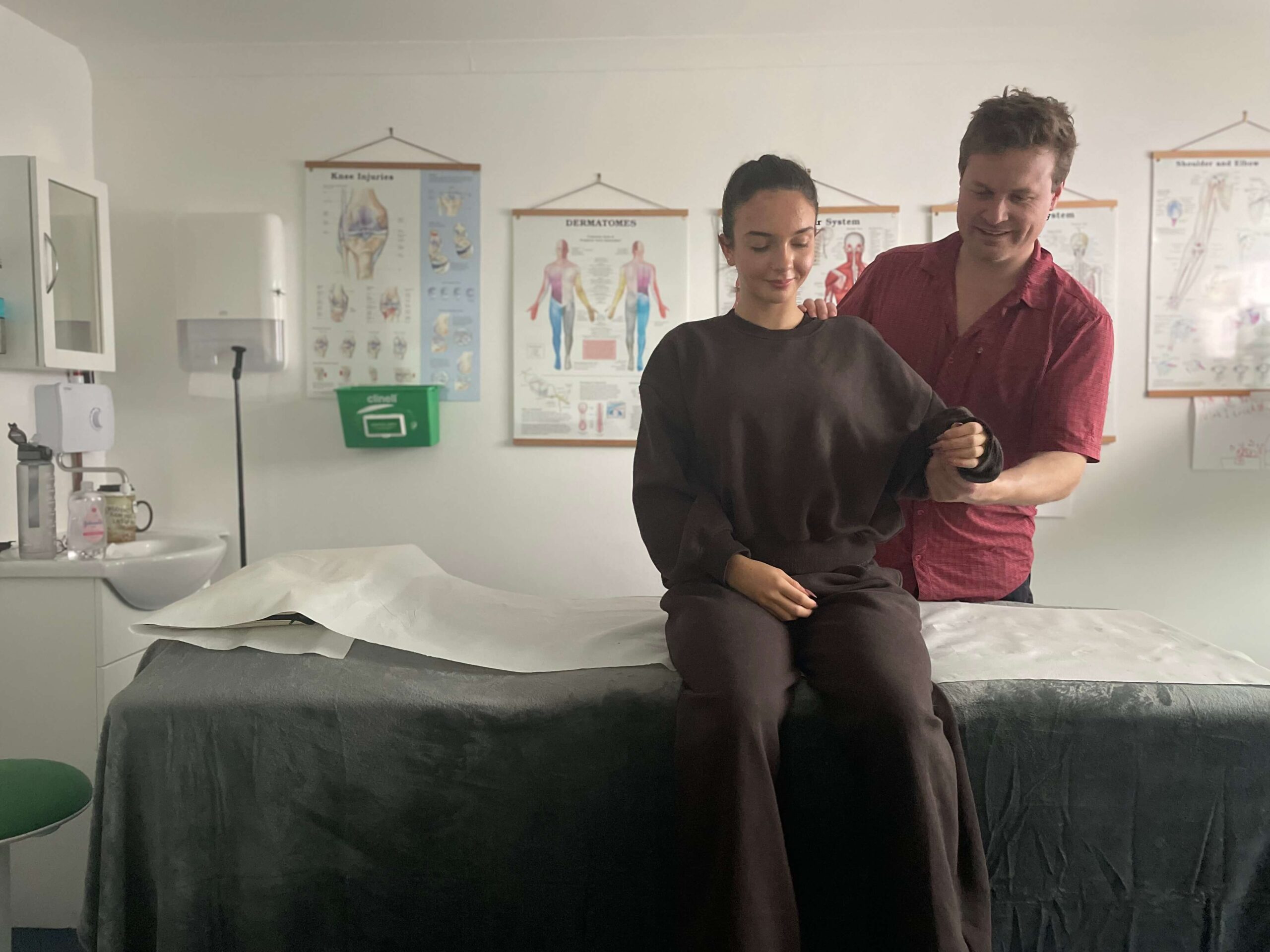
Common Symptoms of Sciatica
Sciatica affects everyone differently. Symptoms may include one or more of the following:
- Pain travelling from the lower back into the buttock
- Pain radiating down the back or side of the leg
- Pain extending below the knee
- Burning, shooting or electric shock-like pain
- Pins and needles in the leg or foot
- Numbness in part of the leg or foot
- Weakness in the leg or foot
- Symptoms that worsen after prolonged sitting
- Difficulty walking comfortably
- Sciatica associated with lower back pain
- Recurring episodes of leg pain
Some people experience only mild discomfort, while others find everyday activities such as walking, driving, sitting at work or sleeping more difficult. The location and intensity of symptoms do not always indicate how serious the underlying problem is.
When Should You Seek Medical Advice?
Many cases of sciatica improve gradually within a few weeks, but it is sensible to seek professional advice if:
- Symptoms are not improving after a reasonable period
- Pain is affecting your work, sleep or daily activities
- Symptoms keep returning
- You develop numbness or tingling in the leg or foot
- You notice weakness in the foot or leg
- Walking becomes increasingly difficult
- You are unsure whether your symptoms are truly sciatica
During your appointment, a thorough assessment will help determine whether your symptoms are likely to respond to conservative treatment or whether further investigation or referral is appropriate.
Seek Urgent Medical Attention Immediately If You Experience:
- Loss of bladder or bowel control
- Numbness around the genitals, buttocks or inner thighs (sometimes called saddle numbness)
- Significant weakness affecting both legs
- Rapidly worsening neurological symptoms
These symptoms are uncommon but require urgent medical assessment, as they may indicate a rare condition requiring immediate treatment.
Sciatica
What Is Sciatica?
Sciatica is a term used to describe pain or other symptoms caused by irritation of the sciatic nerve or one of the nerve roots in the lower back.
The sciatic nerve is the largest nerve in the body. It begins in the lower back, passes through the buttock and travels down the back of each leg into the foot. When the nerve becomes irritated or sensitised, symptoms can occur anywhere along this pathway.
Although sciatica can be extremely painful, it is important to know that most people improve over time without surgery. Many episodes respond well to a combination of staying active, understanding the condition, gradual rehabilitation and appropriate conservative care.
At Highlight Osteopaths in Barry, every assessment begins with understanding exactly what is causing your symptoms. Sciatica can feel alarming, but serious causes are uncommon. The aim is to identify any signs that require medical investigation, explain what is happening in clear language, and help you return to moving with confidence.
Common Symptoms
Sciatica can feel different from person to person.
Pain Travelling Down The Leg
Pain may travel from the lower back or buttock into the thigh, calf or foot.
Burning Or Electric Shock-Like Pain
Some people describe the pain as burning, shooting, sharp or electric in nature.
Tingling Or Pins And Needles
Altered sensations may occur anywhere in the leg or foot.
Numbness
Some people notice patches of reduced sensation.
Weakness
Occasionally, muscles supplied by the affected nerve may feel weaker.
Lower Back Pain
Many people experience both lower back pain and leg symptoms, although the leg pain is often more noticeable.
What Causes Sciatica?
Sciatica is a collection of symptoms rather than a diagnosis itself. Several different conditions can irritate or sensitise the sciatic nerve or the nerve roots that form it.
Common causes include:
Disc-Related Changes
One of the most common causes of sciatica is irritation of a nerve root associated with a spinal disc.
The discs sit between the bones of your spine and act as shock absorbers, helping your back cope with everyday movements. Sometimes changes within a disc can contribute to irritation or inflammation around a nearby nerve.
Importantly, disc changes are extremely common as we get older and are often found on MRI scans in people who have no pain at all. Finding a disc bulge on a scan does not necessarily mean it is the source of your symptoms.
Spinal Narrowing (Spinal Stenosis)
As part of the normal ageing process, the spaces around the nerves can gradually become narrower.
This may irritate the nerves supplying the leg, particularly during walking or prolonged standing. Many people find their symptoms ease when they sit down or lean forwards.
Inflammation Around The Nerve
Sometimes the nerve becomes irritated because of inflammation rather than significant physical compression.
Inflammation can make the nerve more sensitive, meaning everyday movements feel far more painful than expected.
As the inflammation settles, symptoms often improve.
Age-Related Changes
Like every other joint in the body, the spine changes throughout life.
These normal age-related changes may contribute to sciatica in some people, but many people with these changes never develop symptoms.
For this reason, healthcare professionals look at the whole clinical picture rather than relying on scan findings alone.
No Single Identifiable Cause
In some people, there is no single structure that fully explains their symptoms.
This is common and does not necessarily make recovery less likely.
Pain is influenced by many factors, including the sensitivity of the nervous system, general health, sleep, stress levels and physical activity.
Is Sciatica Always Caused By A Trapped Nerve?
Not necessarily.
The phrase “trapped nerve” is widely used, but it often oversimplifies what is happening.
Nerves are living, adaptable tissues. They can become irritated by pressure, inflammation, changes in the surrounding tissues or increased sensitivity within the nervous system.
For many people, it is more accurate to think of the nerve as irritated or sensitised rather than permanently trapped.
This distinction matters because it helps explain why symptoms often improve without surgery and why movement is usually encouraged during recovery.
Does Pain Mean Damage?
Not always.
Sciatica can produce severe pain, burning sensations or electric shock-like symptoms, but the intensity of pain does not necessarily reflect the amount of tissue damage.
Pain is the body’s protective alarm system. Sometimes that alarm becomes more sensitive than usual, particularly if symptoms have persisted for several weeks or months.
This does not mean the pain is imaginary. Rather, it reflects how the nervous system processes information while the body is recovering.
Understanding this often helps people move with greater confidence and reduces the fear that every painful movement is causing further damage.
Do I Need An MRI Scan?
Usually not in the early stages.
Most people with sciatica recover without needing an MRI scan.
Research has shown that findings such as:
- Disc bulges
- Disc degeneration
- Arthritic changes
- Facet joint changes
are commonly seen in people who have no symptoms whatsoever.
For this reason, scans are generally recommended only when:
- symptoms are severe or progressively worsening
- significant weakness is developing
- serious underlying conditions need to be excluded
- symptoms are not improving as expected
- surgery or specialist referral is being considered
If imaging is appropriate, this will be discussed during your assessment and, where necessary, you may be referred to your GP or another healthcare professional.
How Long Does Sciatica Last?
One of the most common questions people ask is:
“How long will it take to recover?”
The honest answer is that recovery varies from person to person.
Many people notice significant improvement within a few weeks, while others take several months to fully recover. This depends on a range of factors, including the cause of the irritation, how long symptoms have been present, your general health, activity levels and previous episodes.
Nerves often recover more slowly than muscles or joints, so patience is sometimes needed.
It’s also perfectly normal for recovery to have good days and bad days. A temporary flare-up doesn’t necessarily mean you’ve caused further damage or gone back to square one. Recovery is rarely a perfectly straight line.
The aim isn’t simply to reduce pain—it’s to help you return to walking, working, exercising and living confidently again.
Should I Keep Walking?
For most people, yes.
Walking is often one of the simplest and most effective ways to stay active during recovery from sciatica.
You don’t need to ignore severe symptoms or push through intense pain, but avoiding movement altogether can sometimes lead to increased stiffness, reduced confidence and slower recovery.
Short, regular walks are often better than one long walk that significantly aggravates your symptoms.
As your symptoms improve, you can gradually increase the distance and pace.
Many of my patients find that gentle walks around Barry Island promenade, Cosmeston Lakes or Porthkerry Country Park provide an enjoyable way to stay active while building confidence during recovery.
Should I Rest?
Short periods of relative rest can be helpful during severe flare-ups, particularly if symptoms are making movement very difficult.
However, prolonged bed rest is generally not recommended.
Current NHS and NICE guidance encourages people to remain as active as their symptoms reasonably allow. Gentle movement helps maintain muscle strength, joint mobility and confidence while reducing the risk of becoming increasingly stiff or de-conditioned.
Think of recovery as finding the right balance between doing too much and doing too little.
Factors That Can Influence Recovery
Recovery from sciatica involves much more than the lower back alone.
A number of factors can influence how symptoms are experienced and how quickly people recover, including:
- Sleep quality
- Physical activity levels
- General health and fitness
- Stress and anxiety
- Smoking
- Confidence in movement
- Fear of causing further damage
- Previous experiences of pain
This doesn’t mean your symptoms are “all in your head.”
These factors have genuine biological effects on pain sensitivity, healing and recovery. Addressing them alongside physical rehabilitation often leads to better long-term outcomes.
What Can You Do Yourself?
Although every case is different, there are several simple things that often support recovery.
Keep Moving
Gentle movement is usually more beneficial than complete rest. Staying active helps maintain strength, flexibility and confidence.
Walk Regularly
Short, comfortable walks are often an excellent starting point. Gradually increase your activity as your symptoms allow.
Pace Your Activities
Try to avoid the common cycle of doing too much on a good day followed by several days of increased pain.
Building activity gradually is usually more sustainable.
Prioritise Good Sleep
Sleep plays an important role in tissue healing, nervous system recovery and pain regulation.
If discomfort is disturbing your sleep, changing your sleeping position or using a pillow between or beneath your knees may improve comfort.
Stay Reassured
Sciatica can feel frightening, particularly when pain travels into the leg.
Fortunately, the outlook is generally positive.
Most people improve without surgery, and understanding what is happening is often one of the most important steps towards recovery.
Can Osteopathy Help?
Osteopathy may help some people manage sciatica as part of an evidence-informed treatment plan.
Every episode of sciatica is different, so treatment begins with a thorough assessment to understand your symptoms, identify contributing factors and determine whether osteopathic care is appropriate.
If your assessment suggests further medical investigation or imaging is needed, this will be explained and you’ll be advised on the most appropriate next step.
Treatment may include a combination of:
Comprehensive Assessment
Understanding exactly what is contributing to your symptoms is the first priority.
This includes assessing your lower back, pelvis, hips, movement patterns, nerve function and overall mobility, while screening for signs that may require medical referral.
Hands-On Treatment
Depending on your presentation, treatment may include gentle joint mobilisation, soft tissue techniques, stretching or spinal manipulation where appropriate.
The aim is to improve movement, reduce stiffness and help you move with greater comfort and confidence.
Exercise And Rehabilitation
Exercise is one of the most important parts of recovering from sciatica.
You’ll receive personalised advice and rehabilitation exercises designed to improve mobility, restore strength and gradually return you to normal daily activities.
Education And Reassurance
Understanding your symptoms is often one of the most valuable parts of treatment.
Knowing what is happening—and just as importantly, what isn’t happening—can reduce fear, improve confidence and help you return to normal movement more comfortably.
Evidence-Based Care
At Highlight Osteopaths, my approach combines current research, clinical experience and your individual goals.
As a registered osteopath regulated by the General Osteopathic Council (GOsC), I work within nationally recognised professional standards and continually update my knowledge through ongoing professional development.
I’m also a member of the Institute of Osteopathy (iO) and the Osteopaths for Progress in Headaches and Migraines (OPHM), reflecting my commitment to providing evidence-informed musculoskeletal care. I further my education weekly as a member of the Academy of Physical Medicine (APM)
Current NICE guidance supports education, exercise and manual therapy—including spinal mobilisation and manipulation—as part of an overall package of care for appropriate people with persistent low back pain and sciatica, rather than relying on passive treatment alone.
Equally important is recognising when osteopathy isn’t the right option.
If, during your assessment, I believe your symptoms require further medical investigation, imaging or another healthcare professional, I’ll explain why and help you access the most appropriate care.
My aim isn’t simply to reduce pain—it’s to help you understand your symptoms, regain confidence in movement and return to doing the things you enjoy.
Summary
Sciatica can be painful, worrying and frustrating, particularly when symptoms travel into the leg or affect everyday activities.
Fortunately, serious causes are uncommon, and most people improve with time and appropriate conservative management.
Modern research has changed how we understand sciatica.
We now know that:
- Pain doesn’t always equate to degree of damage.
- Most people recover without surgery.
- MRI scans are often unnecessary.
- Staying active is usually better than prolonged bed rest.
- Education, exercise and gradual rehabilitation form the foundation of recovery.
- Hands-on treatment may help some people as part of a broader evidence-based management plan.
Whether your symptoms started after lifting, developed gradually or have been returning on and off for years, understanding what’s happening is often the first step towards recovery.
Common Myths About Sciatica
Answers to some of the most common questions about back pain and osteopathic treatment.
Myth: Sciatica Means My Nerve Is Permanently Damaged
In most cases, this isn’t true.
Nerves have an impressive ability to recover, and symptoms often improve gradually as irritation settles.
Myth: Severe Pain Means Severe Damage
Not necessarily.
Pain intensity doesn’t always reflect the amount of tissue damage present. A highly irritated nerve can produce very severe symptoms despite relatively minor structural changes.
Myth: I Need A Scan Immediately
Most people recover without needing an MRI scan.
Scans are usually reserved for situations where the findings are likely to influence treatment decisions or where more serious conditions need to be ruled out.
Myth: I Should Stay In Bed Until It Settles
Extended bed rest is rarely the quickest route to recovery.
Gradually returning to normal movement is usually more beneficial.
Myth: Surgery Is Usually Necessary
Fortunately, no.
The vast majority of people with sciatica improve with time, education, exercise and conservative management.
Surgery is generally considered only when symptoms are severe, progressive or not responding to appropriate non-surgical treatment.
Frequently Asked Questions About Sciatica
Answers to some of the most common questions about Sciatica and osteopathic treatment.
What does sciatica feel like?
Is sciatica serious?
Is sciatica always caused by a slipped disc?
How long does sciatica take to improve?
Should I keep walking with sciatica?
Should I rest if I have sciatica?
Do I need an MRI scan for sciatica?
Can sciatica cause numbness or tingling?
Can stress affect sciatica?
Can osteopathy help sciatica?
Yes, osteopathy may help some people with sciatica, particularly when it forms part of a broader plan rather than relying on hands-on treatment alone.
An osteopathic assessment can look at your symptoms, movement, strength, sensation, reflexes, daily activities and possible contributing factors. Treatment may include education, movement advice, exercise, rehabilitation and manual therapy where appropriate. NICE recommends that manual therapy for low back pain with or without sciatica should be used as part of a treatment package that includes exercise.
Just as importantly, an osteopath should recognise when symptoms require further medical assessment, imaging or referral rather than osteopathic treatment.
Can osteopathy help sciatica?
Which is better for sciatica, a chiropractor or an osteopath?
There is no good evidence that one profession is automatically better than the other for every person with sciatica.
The quality of the assessment, the clinician’s experience, their communication, and whether they use an evidence-informed approach are likely to matter more than the professional title alone.
Look for a practitioner who:
- Carries out a thorough neurological and musculoskeletal assessment
- Explains the likely cause of your symptoms clearly
- Does not promise to “put your spine back into place”
- Uses exercise, education and self-management alongside hands-on treatment
- Reviews your progress rather than recommending an indefinite treatment plan
- Refers you onward when further investigation or medical care is appropriate
For sciatica, current guidance supports an active, individualised approach, with manual therapy considered only as one possible part of a wider package of care.
How many osteopathy sessions do I need for sciatica?
I would love to give a definite answer to this but there is no fixed number because sciatica varies considerably from person to person.
Some people mainly need assessment, reassurance and a clear self-management plan. Others may benefit from a course of treatment and rehabilitation, particularly when symptoms are more irritable or have affected movement, strength, sleep or confidence.
At Highlight Osteopaths, I would review your response early rather than recommending a predetermined number of appointments. The plan should be adjusted according to your symptoms, function, progress and goals.
If you are not improving as expected, the diagnosis and treatment plan should be reconsidered rather than simply continuing the same treatment indefinitely.
Can an osteopath help with piriformis syndrome?
It is important not to assume that buttock pain or sciatica is automatically caused by the piriformis muscle.
Piriformis syndrome is considered an uncommon and sometimes difficult diagnosis because there is no single definitive clinical test, and other causes of sciatic-type pain may need to be excluded.
Where the clinical picture is consistent with piriformis-related pain, osteopathic care may include advice, gentle movement, strengthening, mobility work and manual treatment where appropriate. The aim is not simply to “release” one muscle, but to understand why the area has become sensitive and help restore comfortable movement and function.
What is the worst thing you can do for sciatica pain?
There is not one universally “worst” thing, but prolonged bed rest, repeatedly forcing painful movements and ignoring worsening neurological symptoms are generally unhelpful.
Most people are encouraged to continue with comfortable daily activity and avoid spending long periods sitting or lying down where possible. Movement may need to be reduced or modified during a painful flare-up, but complete inactivity is rarely the long-term answer.
Do not try to “push through” rapidly increasing leg pain, progressive weakness, new numbness around the saddle area, or bladder or bowel changes. These symptoms require prompt medical assessment (999/A&E).
What is the most successful treatment for sciatica?
There is no single treatment that works best for everyone.
For many people, the most effective approach is a combination of time, clear advice, appropriate movement, gradual exercise, symptom management and support to return to normal activity. Manual therapy may help some people, but it should support an active rehabilitation plan rather than replace it.
Treatment should be matched to the likely cause, severity and duration of the symptoms. A smaller number of people with severe, persistent or progressive symptoms may require specialist assessment, injections or surgery.
The most successful plan is usually the one that is appropriately tailored, regularly reviewed and helps you regain confidence and function.
How do you “untrap” your sciatic nerve?
Sciatica does not always mean that the nerve is physically trapped and needs to be “released”.
Symptoms may arise when a nerve root becomes irritated, inflamed, compressed or unusually sensitive. The aim is usually to reduce irritation, improve movement tolerance, restore strength and gradually return to normal activity—not to force the nerve back into place.
Gentle movement and carefully selected exercises may help, but aggressive stretching, repeated painful nerve tensioning or forceful self-manipulation can sometimes aggravate symptoms. The right approach depends on what is causing the sciatica and how irritable the nerve is.
A proper assessment can help determine whether your symptoms are likely to respond to conservative care or whether further investigation is needed.
Should I see a GP?
A GP may be more appropriate if your pain is severe, worsening, affecting your general health, or if medication or further investigation may be needed.
Seek urgent medical assessment if you develop:
- New bladder or bowel changes
- Numbness around the genitals, buttocks or saddle area
- Significant or progressive leg weakness
- Symptoms affecting both legs
- Severe unsteadiness or rapidly worsening neurological symptoms
At Highlight Osteopaths, my role is not only to assess and treat where appropriate, but also to recognise when another healthcare professional or further investigation would be more suitable.
Why Choose Highlight Osteopaths for Sciatica Treatment?
Ready to get started?
Whether you're struggling with a recent injury or pain that's been bothering you for months, I'm here to help.
Book your appointment online today and let's work together to understand your pain and get you moving with confidence again.
Conditions I commonly treat

Reach Out and Chat
Location
31 Lakin Drive,
Barry,
CF62 8AH